
Hot Water Tank Repair & Replacement in Salmon Arm
No hot water, rusty water, or a puddle under the tank. Call and we'll send a plumber.
A failed tank in Salmon Arm can mean a cold shower or a utility room full of water. Call Salmon Arm Plumbing. The plumber confirms the price and the timing with you before they start.
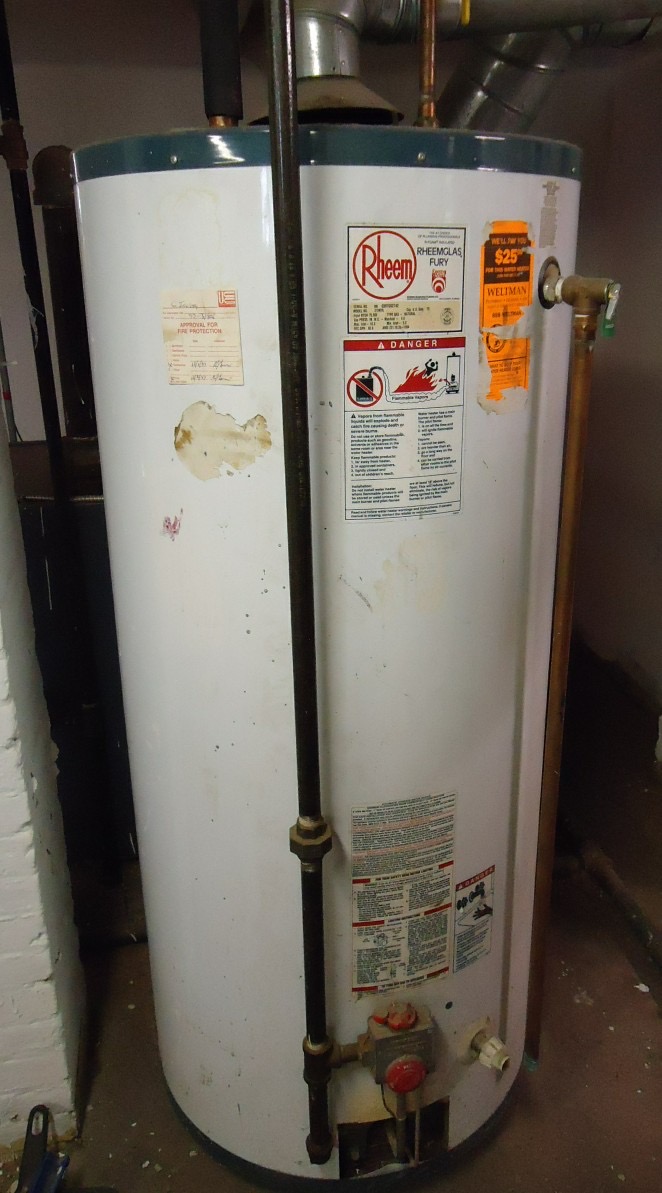
Signs the tank is in trouble
- No hot water, or hot water that runs out halfway through one shower.
- Water that looks rusty, or a metallic smell that was not there last month.
- Rumbling, popping, or banging when the burner or the elements come on.
- Moisture, white crust, or a drip at the base. A wet base usually means the steel shell is leaking.
- A gas pilot that will not stay lit.
- An electric tank that trips the breaker, or a breaker that will not stay on.
- The temperature-and-pressure relief valve dripping onto the floor.
One lukewarm shower can be a thermostat, an element, or a gas control. Water at the base is different: tanks rust from the inside, and a leaking shell gets replaced, not patched. If water is spreading, use the shut-off steps below and theemergency plumber page.
Repair or replace
A tank often lasts about 8 to 12 years. Age is a clue, not a rule. A six-year-old tank with a bad thermocouple is a repair. A twelve-year-old tank with water at a seam is a replacement.
Replace when:
- The tank itself is leaking, not just a fitting above it.
- Rusty water keeps coming back after a flush.
- It cannot keep up with a normal day, and it is already near the end of its life.
- The shell is soft with rust, or the burner area is packed with scale.
A repair can make sense when the tank still holds water and the fault is a part: a thermocouple, a pilot, an element, a thermostat, a weeping valve, or a dripping relief valve. The plumber should say which it is, and price the work, before they start. If the floor is getting wet, shut the cold-water valve on top of the heater if it will turn, switch the power or gas off, and call.
Gas, electric, heat pump, or tankless
Most houses in Salmon Arm have a storage tank. The useful replacement depends on the fuel already in the house, the vent, the space, and how much hot water you use.
Gas tank
A gas tank recovers quickly. It needs a proper vent and a gas supply sized for the heater. In BC, gas installs need a licensed gas fitter and a permit, so ask the plumber who takes the job to confirm the permit for your address. Technical Safety BC oversees gas licences. Do not vent or cap a gas heater yourself.
Electric tank
An electric tank has no flue. It needs a dedicated circuit and dry space around it. It can cost less to buy than gas and more to run, depending on your power rate. Switch the breaker off before anyone drains it. If the floor is wet, do not reach for the panel. Ask the plumber what they will handle and what needs another trade.
Heat pump water heater
A heat pump unit pulls heat from the room air and uses less electricity than a standard electric tank. It needs airflow, a condensate drain, and clearance. A tight closet or an unheated shed is often a poor fit. A garage sometimes works. The price moves with the room, so we do not publish a separate range. The plumber has to see the space.
Tankless
A tankless heater warms water as it flows, so a long shower does not empty a tank, as long as the unit is sized for how many taps run at once. Winter water in the Shuswap is cold, which lowers the flow the unit can deliver. Gas models need enough gas pipe and a vent. Electric models need a lot of panel capacity. They cost more to install than a standard tank. Typical ranges are on the plumber cost page.
What size to ask about
- One or two people: a 40 gallon tank is often enough.
- Three or four people: 50 gallons is the usual step up.
- A larger household, a soaker tub, or several showers at once: ask about 60 gallons, or a tankless unit sized for the flow.
Treat that as a starting point. A plumber sizes from the fixtures and the fuel. If the old tank always ran out, say so. If it was plenty, matching the size is often the simple path.
Anode rods, flushing, and expansion tanks
The anode rod corrodes so the steel shell corrodes more slowly. On many tanks it can be checked and replaced. If the rod is gone and the tank is old, replacing the tank is often the practical path. Sediment on the bottom, common on a well or hard water, causes rumbling. Draining a few gallons from the bottom valve once or twice a year is normal while the tank is healthy. If the valve is stuck or the tank already leaks, leave it alone.
An expansion tank is the small tank on the cold line, not the pressure tank on a well. It gives heated water somewhere to go when a check valve or a pressure-reducing valve blocks flow back to the city main. Many houses on municipal water need one. On a well, start with thewell pump and pressure tank page. The two tanks do different jobs.
Rebates change
FortisBC and CleanBC have offered rebates on some higher-efficiency heaters and heat pump units. Programs change. Ask the plumber, or check the official FortisBC and CleanBC sites, before you count on one. We do not publish rebate amounts.
If the tank is leaking right now
- Close the cold-water valve on top of the tank if it will turn.
- If water is still spreading, close the main shut-off for the house. On a well, switch off the breaker that feeds the pump.
- For gas, turn the control to off if you do not smell gas. For electric, switch off the breaker without standing in the water. If you smell gas, leave and call 911 and FortisBC at 1-800-663-9911.
- Move belongings out of the water and take photos for an insurance claim.
- Call Salmon Arm Plumbing. A leaking shell is a replacement, not a patch. The plumber confirms that on site.
Hidden leaks near a tank, wet drywall, or a stain that spreads are also on theleak repair page. If a cold snap froze the pipes to the heater, read the frozen pipe steps before you light anything. Open flame is the wrong tool on a frozen line.
When you call, say whether the heater is gas or electric, about how old it is, and whether the floor is wet. A photo of the tank label helps. Seetypical price ranges for tanks and tankless unitsbefore the visit.
Common questions
Should I repair or replace a hot water tank in Salmon Arm?
A tank that is leaking from the shell should be replaced. If the tank is younger and the fault is a valve, an element, a thermostat, or a thermocouple, a repair can make sense. A typical tank lasts about 8 to 12 years. The plumber will say which after they see it.
Do I need a permit to replace a gas water heater in BC?
Yes. Gas appliance work in BC needs a licensed gas fitter and a permit. Technical Safety BC oversees gas licences. The plumber who takes the job should confirm the permit for your address.
What size hot water tank should I ask about?
One or two people often use a 40 gallon tank. Three or four people usually step up to 50 gallons. A larger household, or several showers at once, may need 60 gallons or a tankless unit sized for the flow. The plumber sizes it from the fixtures and the fuel.